I was talking with +Adam Muszkiewicz and the rest of the Metal Gods of Ur-Hadad crew the other night, and talk drifted to the notion of alignment. We were trying to figure out, using DCC's Turn Unholy rules, whether or not a particular creature could be sent packing by one of our clerics. As it turned out, it could, but the roll was not successful. So, of course they just killed it the old-fashioned way.
Here's the thing: I've never really liked alignment. It's stupid. (Oh, look, now I'm reduced to calling it names like an 8 year old. What does that say about my alignment?) Here's why. We human beings have certain things about ourselves that we like to think of as permanent, intrinsic, and essential elements of our being. One just is a kind person. He just is a fucking bastard. Those things that one does are the things that one is. But that ain't really how it works.
We are what we are... for now. We have elements of personality that are relatively enduring, certainly, but those things don't much matter until they come into relationship with other things that exist in the world, independently of ourselves. So, one's "kindness" isn't something that one is. It's something that becomes consequential because of one's affiliation and interaction with someone else. One is kind to children and animals, for example, but a complete shit to... creatures that are not animals and children. He is a complete bastard, because he loves money more than he loves you.
So, Item the First: Alignment is a process and involves interactions with other people and things. It is about one's dispositions and motivations toward those people and things.
Also, when we speak of alignment (and this is explicit in the cleric and paladin classes), we're talking about culture. My culture. Your culture. That other guy's culture. I love my culture and wish to celebrate and preserve its awesomeness (lawful). I hate your culture and want to see it destroyed (chaotic). I'm not sure about that other guy's culture, but largely don't give a shit (neutral). Cultural belonging comes along with affiliations with other people, groups, and ideologies, taken as a package. It is filled with contradictions and nonsense, ludicrous ideologies asserted to be the bedrock of The Truth of Things.
Item the Second: Alignment is about affiliations with natural groups and ad hoc collections of people, artifacts, ideologies and other various manifestations of Culture.
Very importantly, culture has a past, a present, and pretensions toward a future. Consider that word, "pretensions." Something is poised, waiting, ready to tend toward some particular outcome. Alignment is about pretensions, expressed and/or internalized, that become the stuff of one's motivations. Motivations about the world and the people therein. Motivations concerning groups and people near and distant in geography and time. Motivations concerning one's place in the world, and whether or not that place is desirable and if it might be changed by some agent or agency. For example, if I am oppressed in some way, I am on some level cognizant of that whether as a well-measured and expressible manifesto or as a less expressible sense of well-being or outrage. It's a measure of one's desire to navigate the world, to act in ways that make sense to us and bring us closer to what we seek, for our own purposes.
Item the Third: Alignment is about one's motivations and how they are manifested toward particular ends, over some period of time.
Given that the motivations I reference above may result in words, deeds, or some other happenings in the world, they have the potential to have effects on oneself and on the world itself. Also, the expressions of our motivations tend to put us into relationships with various others in our worlds. What we do will come back to haunt us, for good or for ill or simply by chance. Others will do the same. The result of our actions is culture, as I've said, but it's also a very, very chaotic system, and natually productive of change and transformation. The world doesn't sit still, because we won't let it do so. We're constantly mucking about with it, and with each other, our actions causing waves or ripples or sinking without trace.
Item the Fourth: Alignment is changeable and is affected by things outside of oneself over one's life, to a greater or lesser extent. Much of this is outside of one's direct control.
Finally, alignment means that we are making moral judgments about the world. That thing is good, and that one bad. This makes my happy, and that makes me sad. Because we are positing a set of relationships between ourselves, each other, and the things (philosopical and material) that exist the world, we impose a moral framwork on those people, things, and happenings (and/or our beliefs about them). We work toward particular ends, sometimes with or against others. But we do so in a way that pursues whatever we consider to just, right, correct, or otherwise in sync with our particular outlook and idiom. We seek to express that outlook/idiom upon the world around us in ways that are thought to "improve" it.
Item the Fifth: Alignment concerns the righteous use of power.
Now, I guess it remains to figure out a way to express this as a mechanic. I'm not certain that needs to happen, however. Again, I will, as that's how I'm aligned, put this into the frame of narrative. This is the story of a particular character and his or her relationship to all of that stuff I just said. So, I'll drag one of my favorite theorists into this: Kenneth Burke, and American scholar of language and power. He developed something called the Pentad to unpack various linguistic expressions of what he called "motivations." His project filled several books, and has been subtle and or vague and/or contradictory in its genius to be more philosophy of approach than actual core, mechanical description of how language or psychology work. In the end, I'm not even sure if Burke "finished" that work. Nonetheless, it's useful here.
Burke's Pentad
Act: What happened.
Scene: The situation
Agent: Who did it.
Agency: How it was done.
Purpose: Why it was done.
Burke called this system, "dramatism," and for him it was an attempt to create connection between what was in the mind and how that was expressed in the world. It was his attempt to see how, in some sense, people turn their lives into stories and make sense of the world in the ways that language allows (i.e., by expressing a narrative of some kind with actors, scenes, agents, agencies, and purposes), in ways that are centered on the things that we care about (good or bad): The Neverending Story of the Eternal I.
A teacher of mine, Michael Calvin McGee, once told me that Burke's dramatism, indeed his whole approach to language, was his attempt to reconcile the works of Marx (political economy) and Freud (subjectivity), an intriguing notion and a daunting task. In any case, he did his best to think about how we are consciously/unconsciously motivated to do and express things in the world, and how we do so and think about doing so in ways prefigured by how we use language. Our use of language provides a more or less narrative structure to our understanding of lives and life-worlds.
Witness, for example, tabloid magazines or reality television. They take everyday activities and subject them to scrutiny, unpacking and examining the acts, circumstances, people, means, and purposes of everything from celebrity actors to child-prodigies of incredible redneckery to trophy wife/hosebeasts. Notice, however, these sorts of media not only "document the atrocities," if you will, but also frame them in ways that provoke us to adopt an attitude toward them. Honey Boo-Boo (I want to punch myself in the face for having typed that) is a child-prodigy of incredible redneckery. This is a facsimile of a person who exists in the world in particular ways. These ways may be similar or dissimilar to my own (Reveal: Not very similar). They may or may not provoke a reaction from me (Vague disgust and desire to become a Canadian citizen instead of living in Georgia). In any case, the depiction of this child (and it's a carefully edited and selective depiction of this child and her particular milieu), provokes a reaction in a lot of people. It may be disgust and anger, or maybe it's a sense of identification with the kid and her family. More importantly, it tells a story. That story provides a moral lesson, the current version of the medieval morality play, forcing each of use to pick a position, even if that position is "I don't give a shit. This stuff is stupid" (an expression of neutral alignment).
Also, it's important to notice how each one of us makes sense of his/her actions and their effects on the world. For example, many people tend to react to everything in the world as if it was specifically targeted at the person in question. That guy cut ME off in traffic! What a dick! Or, maybe we wonder why the weather would ruin OUR plans. Shit doesn't just happen. It happens to me. To make me happy or cause me grief. To afflict my enemies and aid my friends (or vice versa). It's about me, me, me, me, ME!
But how else is a person to view the world. We're all trapped in this awkward meatsacks, separated from each other, longing for connection, and we can only achieve such connection through the intercession of messy, imprecise, and inherently dangerous means of symbolic communication. So we simplify. We cut corners. We narrate order to the world, holding back the uncertainty with hardened ideology and pithy catchphrases, with fashion choices and iconic jargon, with friends and traditions, with all of those things that symbolize US and not THEM.
So, yeah, I think alignment is a bit more complicated than what we usually do with it. I don't have a hard and fast way to put your PCs in their boxes. I don't want one. I'd rather just keep a list. Start with a few things on that list that describe the character and his/her motivations, affiliations and enmities, and so forth. Then let the story make those more or less consequential as they come into play, or get pursued in some way. Keep track of that stuff. It will tell you how your character is aligned.
Oh, and about "alignment language"... *sigh* This makes very clear what I mean when I separate ontological "alignment" from narrative "alignment." Oh, I speak Chaotic Evil. What the fuck is that? Every person of a particular alignment just speaks this language because... what? That doesn't work. I have language because of culture, and subculture affects its particularity of application. For serious, an example: I don't speak with my droogies because of what I am, in terms of alignment. I govreet with these chellovecks because of the particular instance of nadsat culture we are part of. We like to crast pretty polly and engage in a bit of ultraviolence. Cross me, and the red, red kroovy will flow. There's your alignment language. Notice, though, that it's not about belong to an alignment group, but about aligning oneself with a set of particular others, with people, cultural trends, etc. That's what dynamic alignment is.

Showing posts with label archetypes. Show all posts
Showing posts with label archetypes. Show all posts
Monday, May 27, 2013

Monday, April 29, 2013
The Character Class Conundrum and the Axes of Awesome
Recently, I've been thinking a lot about character classes in RPGs. Classes are useful, in that they help to codify archetypes, and those archetypes help to provide conceptual cues related to game genre, power relationships among different classes, and so forth. They are, in effect, shorthand ways to speak of the applied, practical power of any particular character. They are the character's capabilities in short form.
So, if you've got a cleric, you know his powers derive from a relationhip to the Divine, however it might be conceived. Maybe it's a set of magical capabilities (spells) or the power of faith (turning undead). It's also about the characters relationship to combat. A cleric gets armor, or example (a wizard does not), but does not fulfill "fighting man" in the same way as a straight fighter. The paladin, of course, is the bridge between them, and a bullshit class in my opinion, but that's a fight for another day.
Then you have thieves. Thieves wear light armor, creep around stealing and backstabbing and doing all kinds of special thief stuff. They advance in their thievery and get better at it. They can also do some other things well, but the thing that makes a thief a thief is his or her unique skillset. And they're fun to play, so there's that as well.
Here's the thing though. Outside of the fighter and the wizard, the rest of the character classes are kind of bullshit. Wait! Hear me out!
When we think about the power of characters, part of what we're trying to say is, how does this guy (or girl) put a hurtin' on the bad guys? Only the fighter and wizard are purely what they are, simply by doing what they do. The fighter hits things until they die, and the wizard zaps them with arcane energies to do Bad Things to them. A cleric, well, that's sort of a fighterish, wizardlike, hyper-religious dude who hates skeletons (like a lot). A thief? Well that's sort of a fighter who attacks from hiding really well, and has some tinkering skills. Oh, and after a while the thief can use scrolls. Pretty cool, huh?
Here's the thing about clerics and thieves, though. Who freakin' needs 'em? I can do the same thing with just two classes, provided that character generation and development framework provides me with a way to do it. Games like Lamentations of the Flame Princess and Stars Without Number, for example, have specialists and experts to take the place of thieves, and provide a skill-driven conception of that character class. It makes them more flexible. Some systems don't have clerics, but instead have wizards who do healing magic.
Here's what I'd like to consider: All characters could conceivably be derived from the fighter or the wizard classes. From there, we can put them into a triaxial system to vary from the purity of those two archetypes.
The first axis is a continuum of power effects, from brute physicality to arcane magic. This represents how the character does big things in the world, how he or she kills the baddies (among other things). Very few characters would be purely one or the other, but doing so should allow him or her to enjoy benefits for doing one thing really, really well.
Add in a second axis where the continuum goes from Specialized to Eclectic. This represents how the character focuses his or her skills. At the specialized end, the Archetype is very pure; at the eclectic end, it is muddied by other influences. So, a player could have a wizard who specializes in arcane magic, but also is a scholar of relgion, has some tinkering skills, is excellent and interaction with NPCs, and you have the makings of a wizard with a healthy dash of the rogue in him. That's a playable character. At the specialized end, the character gets what goes with the wizard/fighter archetype, in terms of fulfilling each of those archetypes it the expected ways. He or she would be able to do things that less specialized characters could not, but would sacrifice the flexibility less specialized characters could do. For example, a specialized wizard might be able to keep spells after casting them, or learn more of them and at higher levels, or get Read Magic and Dispel Magic more or less as a freebie. There are a lot of ways you might approach that. I'm just spitballing some ideas here.
Finally, the third axis has to do with the characters relationship to the Divine, Spirit, the Winds of Magick, or the influence of the Hidden Realm, or whatever else you want to call it. At one end you have the Realist. This sort of character has no truck with gods, demons or other such creatures. Perhaps the character doesn't believe in them, perhaps he or she doesn't trust them. It literally doesn't matter why. As a result, perhaps the character is resistant to the effects associated with such things (effect: enhanced saving throws versus magic), or something of that nature. However, that character would never have a chance to get bailed out by those things without a significant life change. At the end of alignment with such powers, he or she is able to draw upon them in significant ways, but also is subject to the whims of whatever fates govern them. The end of the spectrum, I'll call the Idealist. So, I am in touch with the Winds of Magic. This gives my magic-attuned character the ability to detect such forces, or to more easily modulate them, or whatever. It also makes it more likely that he or she will get corrupted by chaos energies and grow tentacles, for example.
I think that there are a variety of games that take a very open approach to doing these things (SFX! and FATE are some good example systems for that kind of open approach). What I'm attempting to do here is to stay more constrained and limited to the fantasy roots of my original example. That said, there's no reason this couldn't open up into other genres, or that it wouldn't be a good way to mix up genres.
Anyway, there's a basic framework. Three axes related to Force, Skills, and Hidden Powers. Sometime soon, I'd like to develop mechanics for creation and development. In doing so, I'd like to avoid as much as possible the min/max problem. I'd also like to allow for further development of the character based on what happens in game play (i.e., development based on play, not plan). You start with a certain cluster of capabilties. Those can change over time. They can also develop and become more powerful.
So, if you've got a cleric, you know his powers derive from a relationhip to the Divine, however it might be conceived. Maybe it's a set of magical capabilities (spells) or the power of faith (turning undead). It's also about the characters relationship to combat. A cleric gets armor, or example (a wizard does not), but does not fulfill "fighting man" in the same way as a straight fighter. The paladin, of course, is the bridge between them, and a bullshit class in my opinion, but that's a fight for another day.
Then you have thieves. Thieves wear light armor, creep around stealing and backstabbing and doing all kinds of special thief stuff. They advance in their thievery and get better at it. They can also do some other things well, but the thing that makes a thief a thief is his or her unique skillset. And they're fun to play, so there's that as well.
Here's the thing though. Outside of the fighter and the wizard, the rest of the character classes are kind of bullshit. Wait! Hear me out!
When we think about the power of characters, part of what we're trying to say is, how does this guy (or girl) put a hurtin' on the bad guys? Only the fighter and wizard are purely what they are, simply by doing what they do. The fighter hits things until they die, and the wizard zaps them with arcane energies to do Bad Things to them. A cleric, well, that's sort of a fighterish, wizardlike, hyper-religious dude who hates skeletons (like a lot). A thief? Well that's sort of a fighter who attacks from hiding really well, and has some tinkering skills. Oh, and after a while the thief can use scrolls. Pretty cool, huh?
Here's the thing about clerics and thieves, though. Who freakin' needs 'em? I can do the same thing with just two classes, provided that character generation and development framework provides me with a way to do it. Games like Lamentations of the Flame Princess and Stars Without Number, for example, have specialists and experts to take the place of thieves, and provide a skill-driven conception of that character class. It makes them more flexible. Some systems don't have clerics, but instead have wizards who do healing magic.
Here's what I'd like to consider: All characters could conceivably be derived from the fighter or the wizard classes. From there, we can put them into a triaxial system to vary from the purity of those two archetypes.
The first axis is a continuum of power effects, from brute physicality to arcane magic. This represents how the character does big things in the world, how he or she kills the baddies (among other things). Very few characters would be purely one or the other, but doing so should allow him or her to enjoy benefits for doing one thing really, really well.
Add in a second axis where the continuum goes from Specialized to Eclectic. This represents how the character focuses his or her skills. At the specialized end, the Archetype is very pure; at the eclectic end, it is muddied by other influences. So, a player could have a wizard who specializes in arcane magic, but also is a scholar of relgion, has some tinkering skills, is excellent and interaction with NPCs, and you have the makings of a wizard with a healthy dash of the rogue in him. That's a playable character. At the specialized end, the character gets what goes with the wizard/fighter archetype, in terms of fulfilling each of those archetypes it the expected ways. He or she would be able to do things that less specialized characters could not, but would sacrifice the flexibility less specialized characters could do. For example, a specialized wizard might be able to keep spells after casting them, or learn more of them and at higher levels, or get Read Magic and Dispel Magic more or less as a freebie. There are a lot of ways you might approach that. I'm just spitballing some ideas here.
Finally, the third axis has to do with the characters relationship to the Divine, Spirit, the Winds of Magick, or the influence of the Hidden Realm, or whatever else you want to call it. At one end you have the Realist. This sort of character has no truck with gods, demons or other such creatures. Perhaps the character doesn't believe in them, perhaps he or she doesn't trust them. It literally doesn't matter why. As a result, perhaps the character is resistant to the effects associated with such things (effect: enhanced saving throws versus magic), or something of that nature. However, that character would never have a chance to get bailed out by those things without a significant life change. At the end of alignment with such powers, he or she is able to draw upon them in significant ways, but also is subject to the whims of whatever fates govern them. The end of the spectrum, I'll call the Idealist. So, I am in touch with the Winds of Magic. This gives my magic-attuned character the ability to detect such forces, or to more easily modulate them, or whatever. It also makes it more likely that he or she will get corrupted by chaos energies and grow tentacles, for example.
I think that there are a variety of games that take a very open approach to doing these things (SFX! and FATE are some good example systems for that kind of open approach). What I'm attempting to do here is to stay more constrained and limited to the fantasy roots of my original example. That said, there's no reason this couldn't open up into other genres, or that it wouldn't be a good way to mix up genres.
Anyway, there's a basic framework. Three axes related to Force, Skills, and Hidden Powers. Sometime soon, I'd like to develop mechanics for creation and development. In doing so, I'd like to avoid as much as possible the min/max problem. I'd also like to allow for further development of the character based on what happens in game play (i.e., development based on play, not plan). You start with a certain cluster of capabilties. Those can change over time. They can also develop and become more powerful.
Wednesday, January 9, 2013
Heroic
I was reading +Zak Smith's recent post about game design and was struck by one passage of the text in a weird way. Here's the passage in question (emphasis mine):

This guy is inevitably steel-thewed, his weapon is usually overlarge (projecting much?), etc. Alternately, maybe he has really ridiculous armor of some kind.
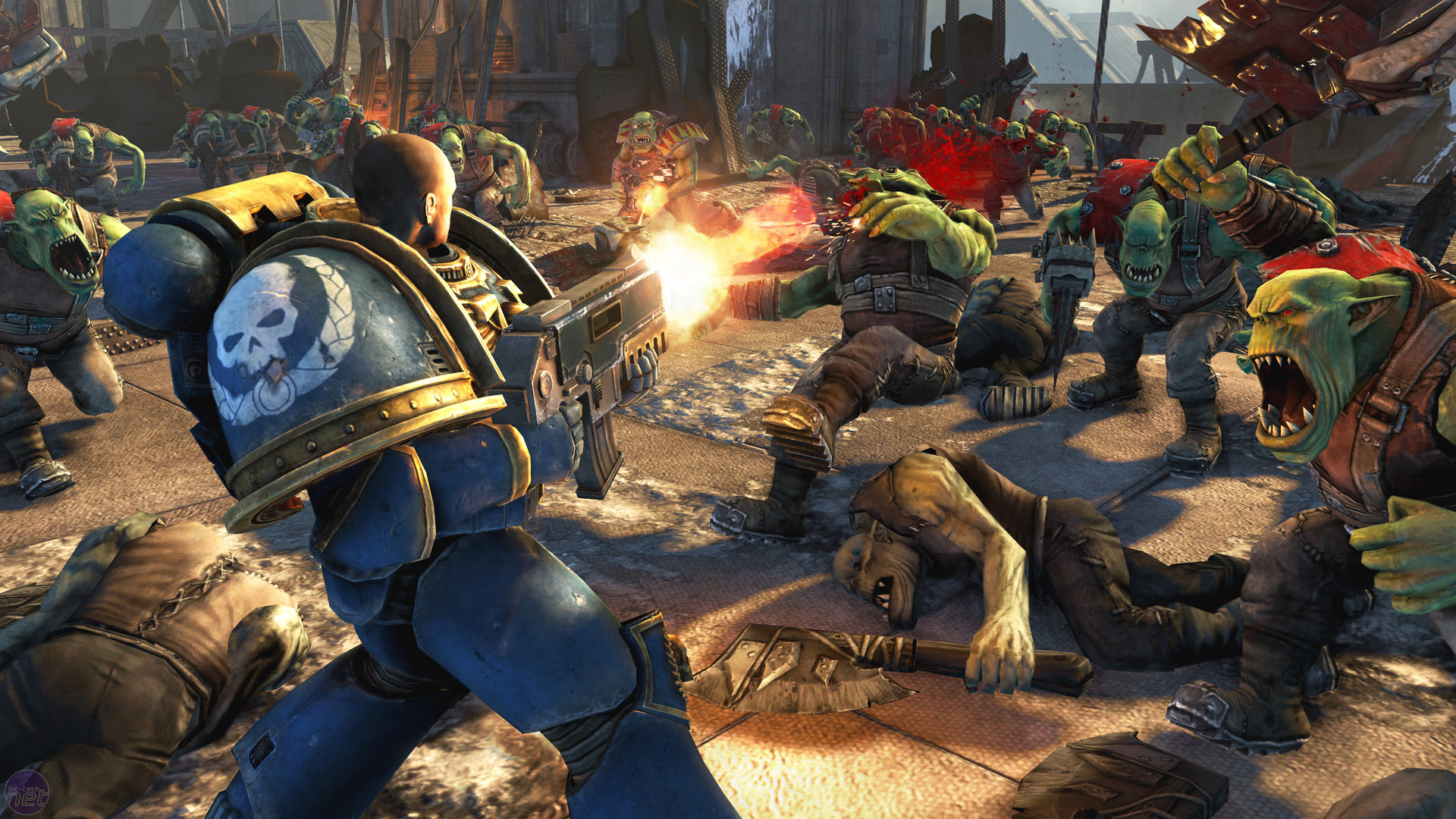
Sometimes, especially for fantasy RPGs, the cover features a Party of some kind, with the iconic character types of the game in question.

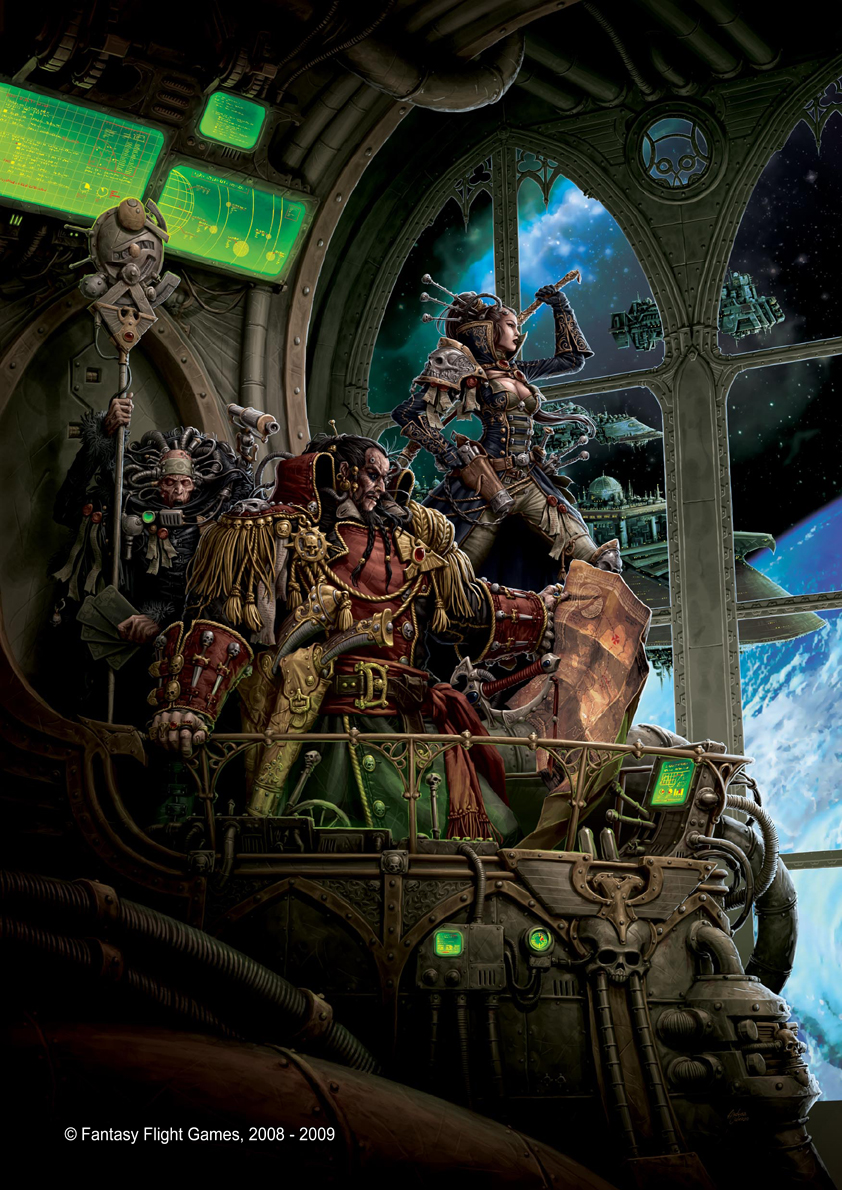 Or this.
Now I know from the internet that there are actually people in the world who look at a module and see a shiny, squarejawed paladin smacking a hunchbacked kobold with a +2 sword forever and think "YES, EXACTLY THAT!" and for them a design which has a "default experience" running up its spine that they can work off of is what they will consider "good". "Why can't we have Mr Default Paladin Smacking Mr Default Orc right there and you can have your crazy expert-GM arty fringe lunacy on top of that?"This description of cover art (nice Orwell reference,btw) is spot-on for many gaming products, which, truth be told, market themselves by showcasing what is (supposedly) heroic--Ex. A Fighter of some kind, with a Sword, slaying a Beast. Or, perhaps, getting the Woman:
Isn't this romantic, Conan? Also, when did you last bathe? Seriously, dude, you reek.
This guy is inevitably steel-thewed, his weapon is usually overlarge (projecting much?), etc. Alternately, maybe he has really ridiculous armor of some kind.
But Helmets are for Pussies!
Sometimes, especially for fantasy RPGs, the cover features a Party of some kind, with the iconic character types of the game in question.
Like this.
The cover art, in essence, projects a fantasy theme of some kind. Though Zak's post is talking more about game design than cover art, he also makes a critical point: Games, however they are designed, are designed for particular audiences, whether or not the author or designer conceives of his or her task as such, and even if that audience is conceived as a "general" audience. All communication involves an audience of some sort, even if that audience is vaguely defined, and, hell, even if that audience is a party of one(self).
That is, to put this into the terms of my own area of scholarship, The Designer/Publisher (Source) puts out a Game (Message) to an Audience (Intended Audience), achieving some sort of Effect (or not). So, as regards the cover designs for RPGs, what the hell is going on here? Here are some things that Zak's post suggested to me (also borrowing somewhat haphazardly from Joseph Campbell, Karl Jung, and Ernest G. Bormann).
As audiences for RPG cover designs, we process the cover art as ourselves. This means that what we attend to, how we process it, and where that takes us are both socioculturally predetermined in some way and intensely personal. That is, we are who we are, as a result of where you are, when you are, and how, in particular, we come to be ourselves (both to others and to ourselves). We are individuals, certainly, but we don't make up from whole cloth how we are ourselves. We must draw on what's around us in order to express or communicate (or even recognize) "self."
Others may or may not be from the same "place" and will process these things differently (or similarly) as a result of how they are positioned, socioculturally and personally. Some of these people are pretty cool, and like what you like, and some are complete nutjob dickwad assholes. Some are both or neither of these things.
That is, we don't just process this artwork (or other design element) in the moment. We often use it as something that we project onto some future we envision. RPG books are not about looking at the cover and going, "Yeah that's cool." or "That sucks." Sure one can do that, but it's more likely that we are more interested in thinking about what can be done with it, or, more specifically, "What does this cover "say" about what the game is about, for me and the things that are important to me?"
However, we never just let the thing in question (e.g., the cover of an RPG book) simply "be itself." Not only is that not really possible (You can't just shut yourself off), it also is not particularly desirable, as it makes it pretty difficult to interact with others in constructing the collective narratives necessary for making RPGs "work." Ernest G. Bormann explains it this way: "We are not necessarily persuaded by reason. We are often persuaded by suggestion that ties in with our dreams" (Ernest Bormann and Nancy Bormann, Speech Communication, 171). That is, we don't just process this artwork (or other design element) in the moment. We often use it as something that we project onto some future we envision. RPG books are not about looking at the cover and going, "Yeah that's cool." or "That sucks." Sure one can do that, but it's more likely that we are more interested in thinking about what can be done with it, or, more specifically, "What does this cover "say" about what the game is about, for me and the things that are important to me?"
An RPG cover, then, presents us with mythology, in the purest sense, the essence of what the thing is about. We project onto that thing based on what it shows us, who we are, and what it shows us about what we want. Some things don't push our buttons at all, so we don't care about them. Some things push the wrong buttons, and we instantly react negatively toward them on some level. But the important thing to remember is that, whatever the work in question, we are positioning ourselves with respect to it, or with respect to the people, places, or things we associate with it, all as a part of our viewing the cover of the RPG book.
So, when I look at this:
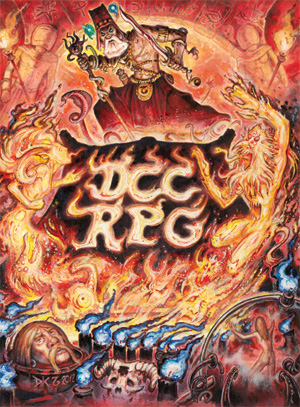
I process it differently than might someone else, and very differently from someone who is not interested in the themes and myths and so forth suggested by its iconography. Even when an RPG book doesn't have a stylized cover, other design elements are included. Even if it's just a blank, black cover, that "says" something to the viewer. "Dude, where's the art?" or "Dude, this shit's so heavy it don't need no art!" or whatever.
One of the things I find so interesting about this dynamic is people's ability (or inability in some cases) to understand that a person's interaction with a game book (or game system) is, in fact, an interaction between self and the object. So, a person who fails (or refuses) to recognize that the fact that he or she thinks something "is awesome" or "sucks," is very much about that person, and not just about the objective thing in question. It is awesome because of you, not just because it, objectively, is awesome.
That said, when we get into a broader discussion of culture and aesthetics, we may, in a collective sense, have some sense of propriety about what is or is not "good," whether it be an artifact like an RPG book, or some object, style, or activity (e.g., the latest fad or fashion), or whatever. Sometimes things are seen, in a broader, collective sense, to suck donkey balls (This is necessary technical terminology, of course). Still, that consensus is built upon those shared themes and values appropriate to and appropriated by that particular community. This is, no doubt, why groups of gamers who value certain kinds of play, rulesets, and aesthetics can look across a divide that lies between them and wonder, "What the fuck is wrong with those people? Seriously, they suck!" And, no, I don't find it easy to get away from that, even knowing that part of that dynamic is me projecting my values onto those activities, objects, and people. I recognize that I'm doing it, but it's incredibly difficult to get any kind of distance between "me and mine" and "them and theirs."
For me, in the end, to be able to enjoy a game, I have to be able to project some part of myself into the matrix of signifiers in and around the game in question. To me, that DCC wizard cover is badass in a very particular way. It hits some buttons for me. Same thing with Frank Zappa. Other people may, at best, be amused by me and the things I think are cool. I think that was Zak's original point about design: There is no objectively well-designed game that doesn't account for particularity of players and play styles. If a game only has one generalized player in mind, then it misses the point that only people who like that kind of thing will like it in particular. The mechanics may work well. It might be systematically developed and presented in sound ways. However, it can still suck for some players or groups, especially if those players or groups are unable to find space in which to project their own fantasies onto the object (e.g., the book cover) or system (e.g., Dungeon Crawl Classics) in question.
Games that make it possible to project those fantasies in mechanically interesting ways, I think, provide much greater opportunities for broader groups to enjoy them. They may not do anything perfectly in a mechanical sense, but they provide enough wiggle room for particular groups of players to make it work, and work well, for them. That's great, because it makes possible to have gaming experiences where the players can make the experience about them, but allow other players to do the same thing for themselves. Hell, the GM has more freedom in this scenario, as well, to incorporate what the other people bring (of themselves) to the gaming table. Everybody is creating this cool thing (or not, because maybe you just want to chill out and watch your crazy friends do their things), and it's fun. What's not to like about that?
As far as the recent discussion of sexism in games, this also is apt. When one sees "blatant" sexism, then perhaps, objectively, there are elements there from which one can make this judgment (see Conan picture above). Submissive female figure, chainmail bikini, and so forth. However, to ignore that part of what one "sees" involves the projection of one's own shit (sociocultural, personal, etc.) onto that set of signifiers is to mistake the relationship between oneself and the object in question. "It" is not the problem. "It" is a condensation symbol for a variety of other meaningful things. Meaningful in many senses, including very, very personal ones. So for someone to call something objectively sexist ignores that such a judgment must be made from a position from which the particular judge is, well, judging. Sexist. To you.
This is not to say that in broader, cultural sense that some things aren't generally accepted as bloody fucking awful. We do, as a people, find thing we can agree to love or to hate. We do it very naturally. We do it in ways, also, that allow us to form in-groups and out-groups, and to make judgments of various sorts about people, things, activities, and so forth that we like or to which we object. It would be a mistake, however, to assume that this judgment of those people, things, and activities is any more objective, simply because it is broadly accepted as "true" by a particular culture.
That said, I, personally, can and do make value judgments about people, things, and activities, and do it all the time. It's what allows me to have a sense of what is or is not good/bad, ethical/suspect, etc. I cannot, however, imagine that what I do now will look the same to someone 50 or 100 years from now (or before now). Different context means, usually, different judgments. However, I don't like people who treat women like crap. But when I say that, I don't mean that those women must somehow accord with some fantasy I have about their objective level of subjugation by the Patriarchy. I mean how those women are interpellated (i.e., "called to accept a particular social relationship") into a particular model of feminine virtue. What choices do they have (or are they permitted)?
For me, their agency in the situation is the point. I don't object to women's personal decisions about their sexual lives, or whatever, because its not my choice. It's theirs. Nor do I think that an artist drawing a woman in a chainmail bikini is objectively sexist, as some do, because women are not required as a result of that piece of art, to don such a garment or to accept a subservient position (as if those are synonymous, anyway). I don't object to a woman's choice to act submissively or to adopt the so-called "Gorean" lifestyle, as some do, provided it is, in fact a choice. Objectively, then, no problem, provided the woman in question actually has agency in the situation. Subjectively, though, I don't get it, and don't care for it. I think Goreans are fucking creepy. I think men who think about women as objects to be used are assholes. But I recognize my judgment is at work, here, just as much as in the case of the person who values those things. I may have culture on my side, for now at least (Fuck you, Rick Santorum.), but I am making a subjective judgment.
Still, I might be inclined to make statements about such things, to judge those people and those activities as "fucked up" or whatever. But then I wonder why I'm reacting to them, and realize that it's at least as much about me as it is about them, and I can accept that. The real trick is in being able to do both of these things (i.e., subjectively judging or being objectively ambivalent) at the same time, without thinking you're doing one or the other exclusively. So, "That sucks, but have fun with it. Over there. Waaaaay over there." I can do that: Subjectively objective, that's me.
As audiences for RPG cover designs, we process the cover art as ourselves. This means that what we attend to, how we process it, and where that takes us are both socioculturally predetermined in some way and intensely personal. That is, we are who we are, as a result of where you are, when you are, and how, in particular, we come to be ourselves (both to others and to ourselves). We are individuals, certainly, but we don't make up from whole cloth how we are ourselves. We must draw on what's around us in order to express or communicate (or even recognize) "self."
Others may or may not be from the same "place" and will process these things differently (or similarly) as a result of how they are positioned, socioculturally and personally. Some of these people are pretty cool, and like what you like, and some are complete nutjob dickwad assholes. Some are both or neither of these things.
That is, we don't just process this artwork (or other design element) in the moment. We often use it as something that we project onto some future we envision. RPG books are not about looking at the cover and going, "Yeah that's cool." or "That sucks." Sure one can do that, but it's more likely that we are more interested in thinking about what can be done with it, or, more specifically, "What does this cover "say" about what the game is about, for me and the things that are important to me?"
However, we never just let the thing in question (e.g., the cover of an RPG book) simply "be itself." Not only is that not really possible (You can't just shut yourself off), it also is not particularly desirable, as it makes it pretty difficult to interact with others in constructing the collective narratives necessary for making RPGs "work." Ernest G. Bormann explains it this way: "We are not necessarily persuaded by reason. We are often persuaded by suggestion that ties in with our dreams" (Ernest Bormann and Nancy Bormann, Speech Communication, 171). That is, we don't just process this artwork (or other design element) in the moment. We often use it as something that we project onto some future we envision. RPG books are not about looking at the cover and going, "Yeah that's cool." or "That sucks." Sure one can do that, but it's more likely that we are more interested in thinking about what can be done with it, or, more specifically, "What does this cover "say" about what the game is about, for me and the things that are important to me?"
An RPG cover, then, presents us with mythology, in the purest sense, the essence of what the thing is about. We project onto that thing based on what it shows us, who we are, and what it shows us about what we want. Some things don't push our buttons at all, so we don't care about them. Some things push the wrong buttons, and we instantly react negatively toward them on some level. But the important thing to remember is that, whatever the work in question, we are positioning ourselves with respect to it, or with respect to the people, places, or things we associate with it, all as a part of our viewing the cover of the RPG book.
So, when I look at this:
Hammertime, yo!
I process it differently than might someone else, and very differently from someone who is not interested in the themes and myths and so forth suggested by its iconography. Even when an RPG book doesn't have a stylized cover, other design elements are included. Even if it's just a blank, black cover, that "says" something to the viewer. "Dude, where's the art?" or "Dude, this shit's so heavy it don't need no art!" or whatever.
One of the things I find so interesting about this dynamic is people's ability (or inability in some cases) to understand that a person's interaction with a game book (or game system) is, in fact, an interaction between self and the object. So, a person who fails (or refuses) to recognize that the fact that he or she thinks something "is awesome" or "sucks," is very much about that person, and not just about the objective thing in question. It is awesome because of you, not just because it, objectively, is awesome.
That said, when we get into a broader discussion of culture and aesthetics, we may, in a collective sense, have some sense of propriety about what is or is not "good," whether it be an artifact like an RPG book, or some object, style, or activity (e.g., the latest fad or fashion), or whatever. Sometimes things are seen, in a broader, collective sense, to suck donkey balls (This is necessary technical terminology, of course). Still, that consensus is built upon those shared themes and values appropriate to and appropriated by that particular community. This is, no doubt, why groups of gamers who value certain kinds of play, rulesets, and aesthetics can look across a divide that lies between them and wonder, "What the fuck is wrong with those people? Seriously, they suck!" And, no, I don't find it easy to get away from that, even knowing that part of that dynamic is me projecting my values onto those activities, objects, and people. I recognize that I'm doing it, but it's incredibly difficult to get any kind of distance between "me and mine" and "them and theirs."
For me, in the end, to be able to enjoy a game, I have to be able to project some part of myself into the matrix of signifiers in and around the game in question. To me, that DCC wizard cover is badass in a very particular way. It hits some buttons for me. Same thing with Frank Zappa. Other people may, at best, be amused by me and the things I think are cool. I think that was Zak's original point about design: There is no objectively well-designed game that doesn't account for particularity of players and play styles. If a game only has one generalized player in mind, then it misses the point that only people who like that kind of thing will like it in particular. The mechanics may work well. It might be systematically developed and presented in sound ways. However, it can still suck for some players or groups, especially if those players or groups are unable to find space in which to project their own fantasies onto the object (e.g., the book cover) or system (e.g., Dungeon Crawl Classics) in question.
Games that make it possible to project those fantasies in mechanically interesting ways, I think, provide much greater opportunities for broader groups to enjoy them. They may not do anything perfectly in a mechanical sense, but they provide enough wiggle room for particular groups of players to make it work, and work well, for them. That's great, because it makes possible to have gaming experiences where the players can make the experience about them, but allow other players to do the same thing for themselves. Hell, the GM has more freedom in this scenario, as well, to incorporate what the other people bring (of themselves) to the gaming table. Everybody is creating this cool thing (or not, because maybe you just want to chill out and watch your crazy friends do their things), and it's fun. What's not to like about that?
As far as the recent discussion of sexism in games, this also is apt. When one sees "blatant" sexism, then perhaps, objectively, there are elements there from which one can make this judgment (see Conan picture above). Submissive female figure, chainmail bikini, and so forth. However, to ignore that part of what one "sees" involves the projection of one's own shit (sociocultural, personal, etc.) onto that set of signifiers is to mistake the relationship between oneself and the object in question. "It" is not the problem. "It" is a condensation symbol for a variety of other meaningful things. Meaningful in many senses, including very, very personal ones. So for someone to call something objectively sexist ignores that such a judgment must be made from a position from which the particular judge is, well, judging. Sexist. To you.
This is not to say that in broader, cultural sense that some things aren't generally accepted as bloody fucking awful. We do, as a people, find thing we can agree to love or to hate. We do it very naturally. We do it in ways, also, that allow us to form in-groups and out-groups, and to make judgments of various sorts about people, things, activities, and so forth that we like or to which we object. It would be a mistake, however, to assume that this judgment of those people, things, and activities is any more objective, simply because it is broadly accepted as "true" by a particular culture.
That said, I, personally, can and do make value judgments about people, things, and activities, and do it all the time. It's what allows me to have a sense of what is or is not good/bad, ethical/suspect, etc. I cannot, however, imagine that what I do now will look the same to someone 50 or 100 years from now (or before now). Different context means, usually, different judgments. However, I don't like people who treat women like crap. But when I say that, I don't mean that those women must somehow accord with some fantasy I have about their objective level of subjugation by the Patriarchy. I mean how those women are interpellated (i.e., "called to accept a particular social relationship") into a particular model of feminine virtue. What choices do they have (or are they permitted)?
For me, their agency in the situation is the point. I don't object to women's personal decisions about their sexual lives, or whatever, because its not my choice. It's theirs. Nor do I think that an artist drawing a woman in a chainmail bikini is objectively sexist, as some do, because women are not required as a result of that piece of art, to don such a garment or to accept a subservient position (as if those are synonymous, anyway). I don't object to a woman's choice to act submissively or to adopt the so-called "Gorean" lifestyle, as some do, provided it is, in fact a choice. Objectively, then, no problem, provided the woman in question actually has agency in the situation. Subjectively, though, I don't get it, and don't care for it. I think Goreans are fucking creepy. I think men who think about women as objects to be used are assholes. But I recognize my judgment is at work, here, just as much as in the case of the person who values those things. I may have culture on my side, for now at least (Fuck you, Rick Santorum.), but I am making a subjective judgment.
Still, I might be inclined to make statements about such things, to judge those people and those activities as "fucked up" or whatever. But then I wonder why I'm reacting to them, and realize that it's at least as much about me as it is about them, and I can accept that. The real trick is in being able to do both of these things (i.e., subjectively judging or being objectively ambivalent) at the same time, without thinking you're doing one or the other exclusively. So, "That sucks, but have fun with it. Over there. Waaaaay over there." I can do that: Subjectively objective, that's me.
Subscribe to:
Posts (Atom)